
Social Worker Home Visits and Interviewing Skills

Diverse modalities including topic specific eLearnings, instructor-led trainings, transfer of learnings, videos and video discussion guides provide unique ways to strengthen APS professionals interpersonal and investigative skills when conducting home visits or meeting with collaterals. APS and other health and human services social workers conduct various interviews which require the ability to meet with people and have meaningful discussions in order to better understand their experience. Staff who conduct home visits or similar interactions, trainers and supervisors can incorporate these learning experiences into their professional development.

Developed By

Developed by APSWI in collaboration with various subject matter experts, California Curriculum Advisory Committee and NAPSA Education Committee and Academy’s Learning and Experience Design Team.

This course explores strategies to help you build, maintain, and strengthen rapport with clients, collateral contacts, and alleged perpetrators. These skills will support open communication, reduce reluctance and defensiveness, and help you explore ambivalence while fostering collaboration and person-directed service planning.

Using the APSWI Video: Asking Inclusive Demographic Questions and this new Video Discussion Guide, APS Supervisor and/or Facilitators can support staff in their responsibility to fulfilling the mandates of AB959 and provide culturally responsive services. This discussion guide provides information to help prepare a  Supervisor or Facilitator to incorporate the material as well as Frequently Asked Questions and video discussion prompts to use either in training, unit meetings or individual supervision.

Early in the education of APS professionals, they are taught the basics of interviewing. While foundational interviewing techniques are important, they are often not enough to get the level of evidence from an interview that is needed for an APS case. Enhanced Cognitive Interviewing (ECI) is an interviewing method that has been shown to gather 40% more information out of an interview than other methods. ECI also allows APS professionals to better assess the validity of the information being provided. This workshop takes participants through the principles and techniques of ECI so that they can add this technique to their existing interviewing skills. ECI is discussed in practical terms that account for the diversity of individuals interviewed by APS, time constraints on APS professionals, and the need for trauma informed approaches.

Course Materials

In this 90-minute interactive eLearning, Adult Protective Services professionals will learn the definitions of sexual orientation and gender identity, and briefly learn the different types of sexual orientations and gender identities people have. They will be guided through a brief history of significant milestones that impact the LGBTQ+ community today. Finally, they will learn the importance of asking inclusive demographic questions, along with techniques to facilitate the discussion.

Transfer of Learning Packet, 2023

Supervisors and Facilitators can complete various activities to transfer concepts from the eLearning and apply them into APS practice.

Open-ended questions are one of the most effective ways to guide an APS interview. They shape the tone of the conversation and support trauma‑informed, person‑centered practice by honoring each client’s voice, choice, and perspective on safety and well‑being. In this brief microlearning, APS professionals will watch three short video clips and select the open‑ended questions that would best encourage clients to share more of their story.

African American woman and man in a discussion with paperwork.
Format

Curriculum, eLearning, Guide, Video

Program

APSWI, SDOA

Audience

Adult Protective Services agencies, Behavioral Health organizations, Child Welfare agencies, Individual professionals

Topics

Coaching & Performance Support, Cultural Responsiveness, Diversity, Equity, Inclusion, Practice-Based Learning, Recruitment and Retention

Date Updated

November 2026

SHARE

More from APSWI, SDOA

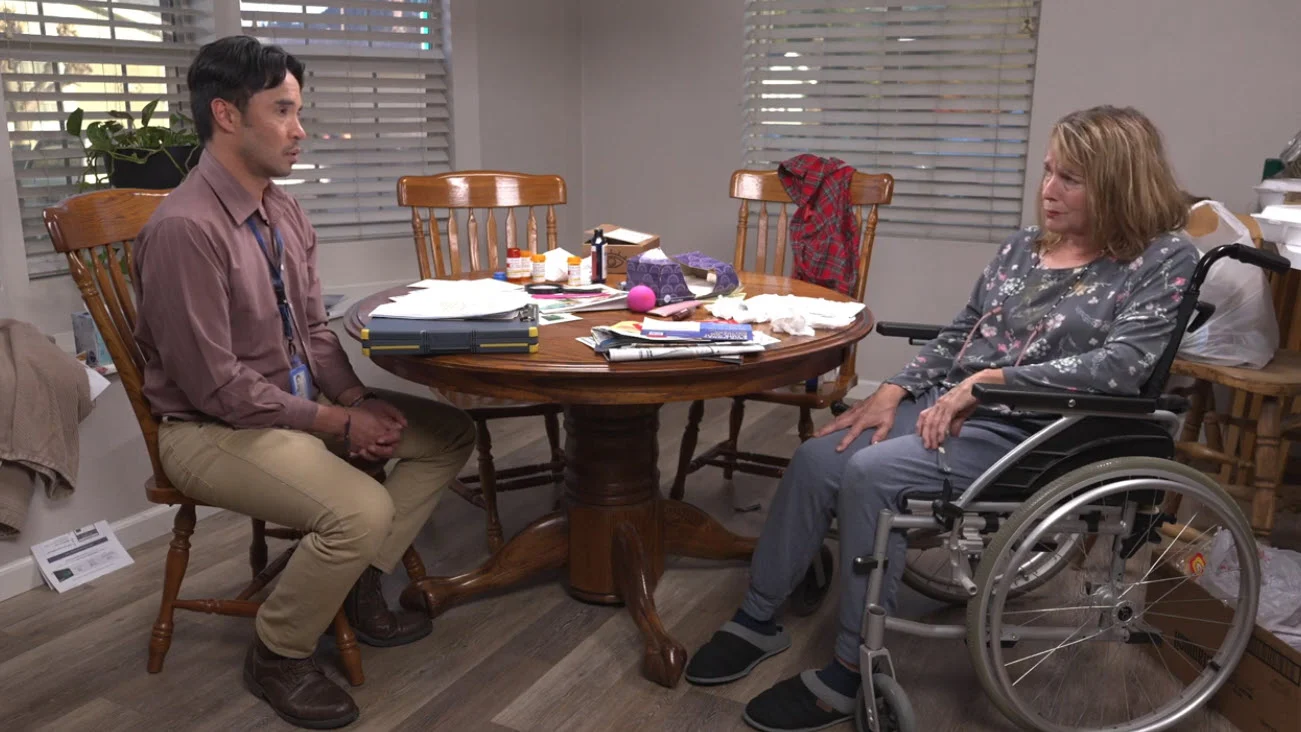
  • Woman in wheelchair with caseworker at a dining room table.

    Assessment, Curriculum, eLearning, Guide, Video

    Assessing Risk

  • mallet of the judge.

    Curriculum

    Investigating APS Criminal Cases Instructor-Led Training

  • Two Enterprise Risk Managers Use Computer Tools Analyzing Finance

    eLearning

    SOC 242 and You: What You Need to Know eLearning